Kyoto, Japan

Kyoto is a city that conjures romantic images of ancient Japan: geishas scurrying through quiet alleyways lined with traditional wooden houses. Serene shrines nestled into the side of lush mountains. Hidden teahouses. Maybe a temple bell ringing in the distance.
And to be fair, that’s pretty much what you get. Kyoto is an absolutely beautiful city. And I know we were tourists, but our plan was to see as much of the city as possible without getting stuck in big crowds of tour groups. We wanted to explore the shrines, temples and wooden houses, but also explore the city that’s home to 1.5 million people today; for every historic alleyway, Kyoto has many more bustling streets of people, cars, skyscrapers and neon – it’s not a living museum by any means.

Our hostel in Kyoto, Piece Hostel Kyoto, was modern and magnificent. For a little over £35 per night, we had a private room with a very comfy bed, shared (but very nice) bathrooms, and coffee beans with hand grinders ready in the communal kitchen. As travellers on a budget this was absolutely perfect, and we set about grinding beans for our first drip coffee.
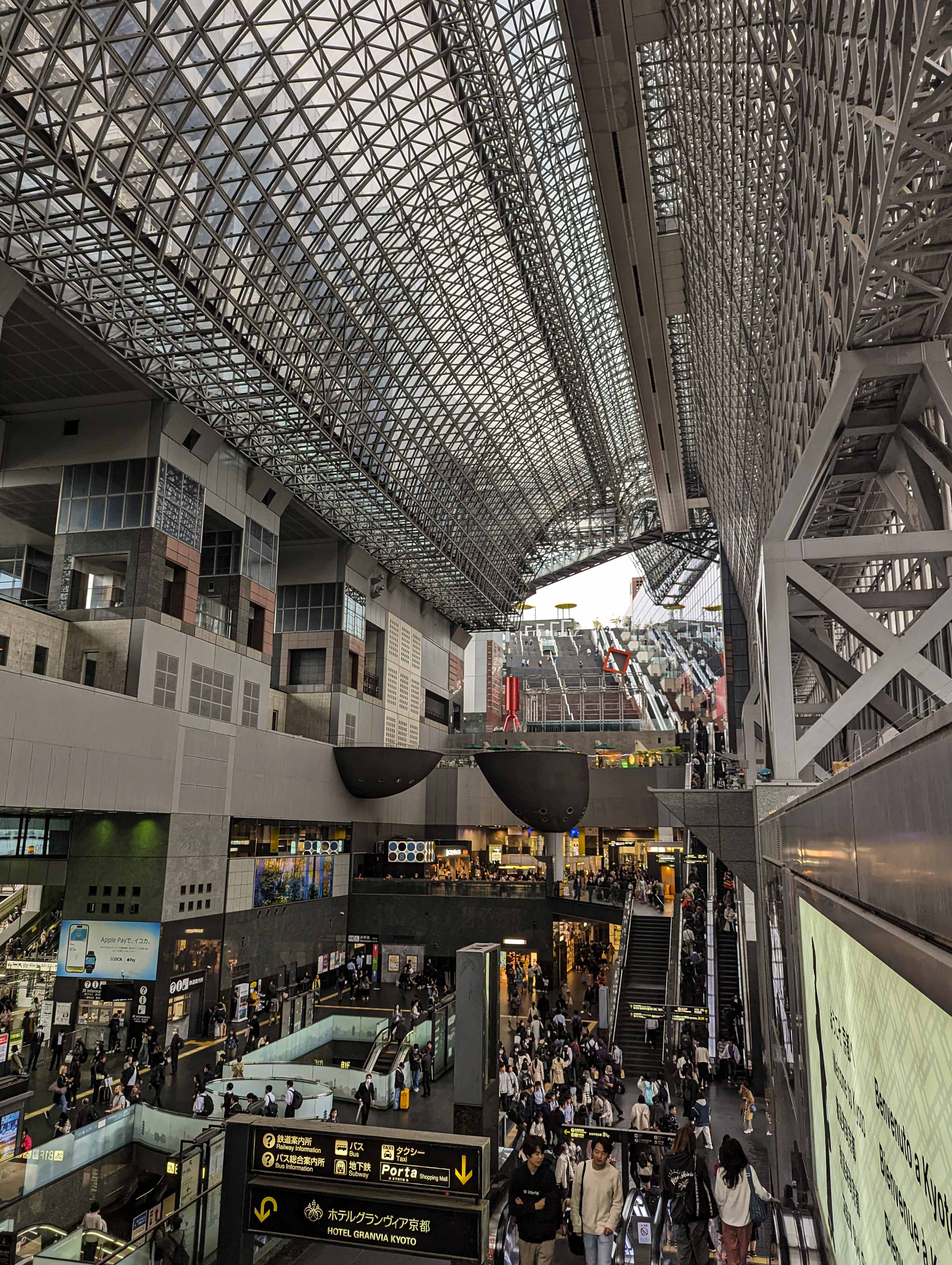
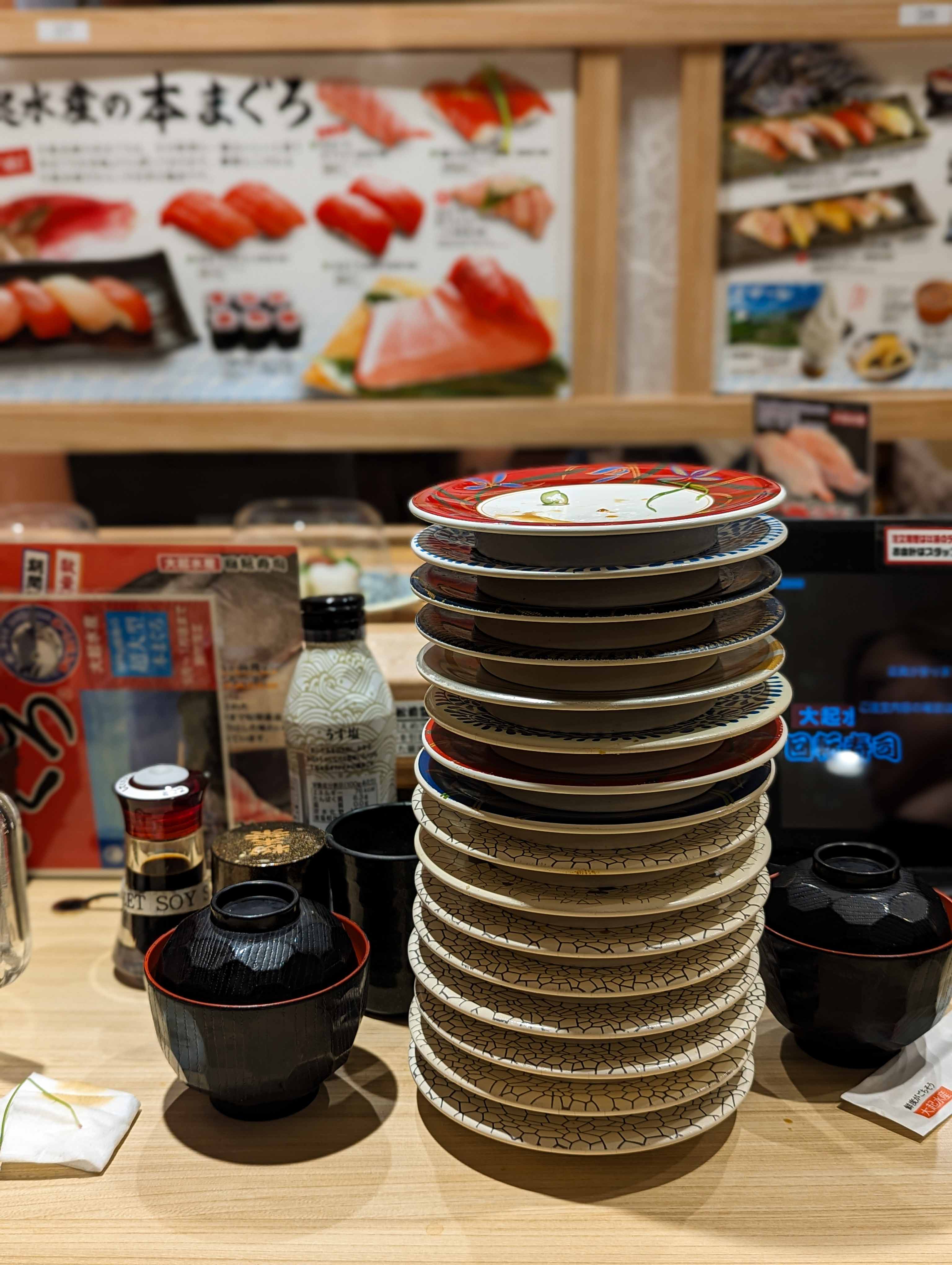
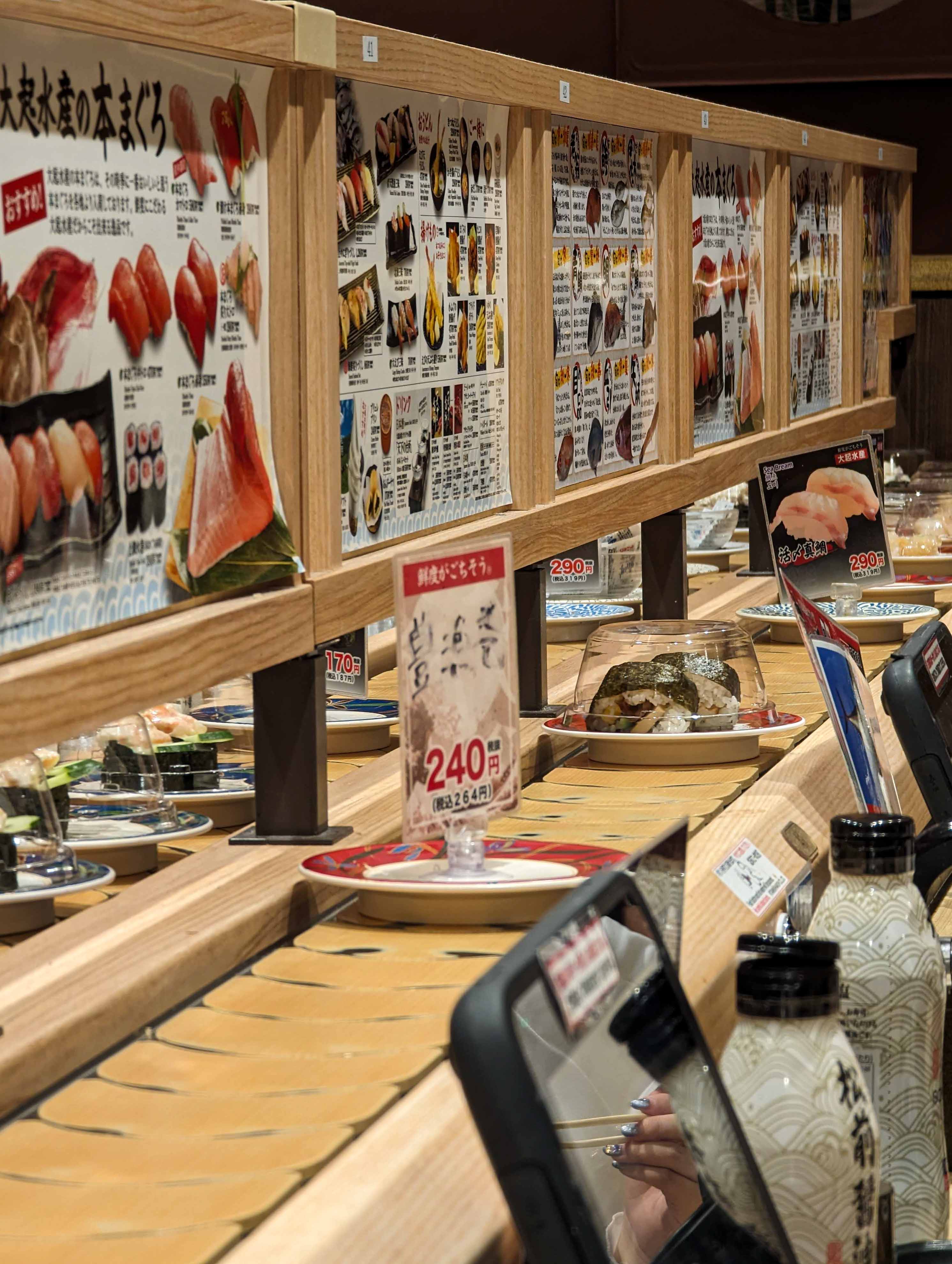
The hostel was just by the main railway station, which was redesigned in 1997, and is probably one of the most impressive stations I’ve ever been in. The central atrium is 60 m high, its glass roof supported by a huge metal gridwork structure. The station has 15 storeys of shops, cinemas, restaurants, and even some railway lines too. We’d been recommended a little conveyor belt sushi restaurant, Daiki-suisan kaitenzushi Kyoto-tower-sand, nestled away in the depths of the station, so we took a couple of seats by the belt to see what would come our way. An hour later we sat back on our chairs, breathing deeply after far too much food, and counted up the stack of dishes. We realised we’d worked our way through nearly 30 plates of some of the best sushi we’ve ever had – and all for just ¥4,300, less than £22 total for both of us.
We were keen to visit Fushimi Inari Taisha, one of the most important shrines in Japan dedicated to Inari, the Shinto god of rice. And it’s not even slightly off the beaten track. In fact, I’d say the beaten track goes right up to the entrance and through the ticket gate. The place was absolutely packed.

The shrine is home to over ten thousand wooden torii which cover the paths up into the hills, accompanied by little statues of foxes, the messenger of the Inari, who often wear little red neckerchiefs. Quite a few people seem to visit Fushimi Inari Taisha to simply take selfies. So the further you walk and the higher you climb, the fewer people you see. After walking through thousands and thousands of torii, you’re eventually alone on the pathway in the hill, surrounded only by torii, fox statues and trees. We found a little ledge and poured ourselves cups of steaming coffee from our Thermos (hand-ground, of course), and sat looking over the valley towards Kyoto. I’m not even a slightly religious person, but sometimes I get a little glimpse of why a religious site has ended up so sacred – and this was one of them.

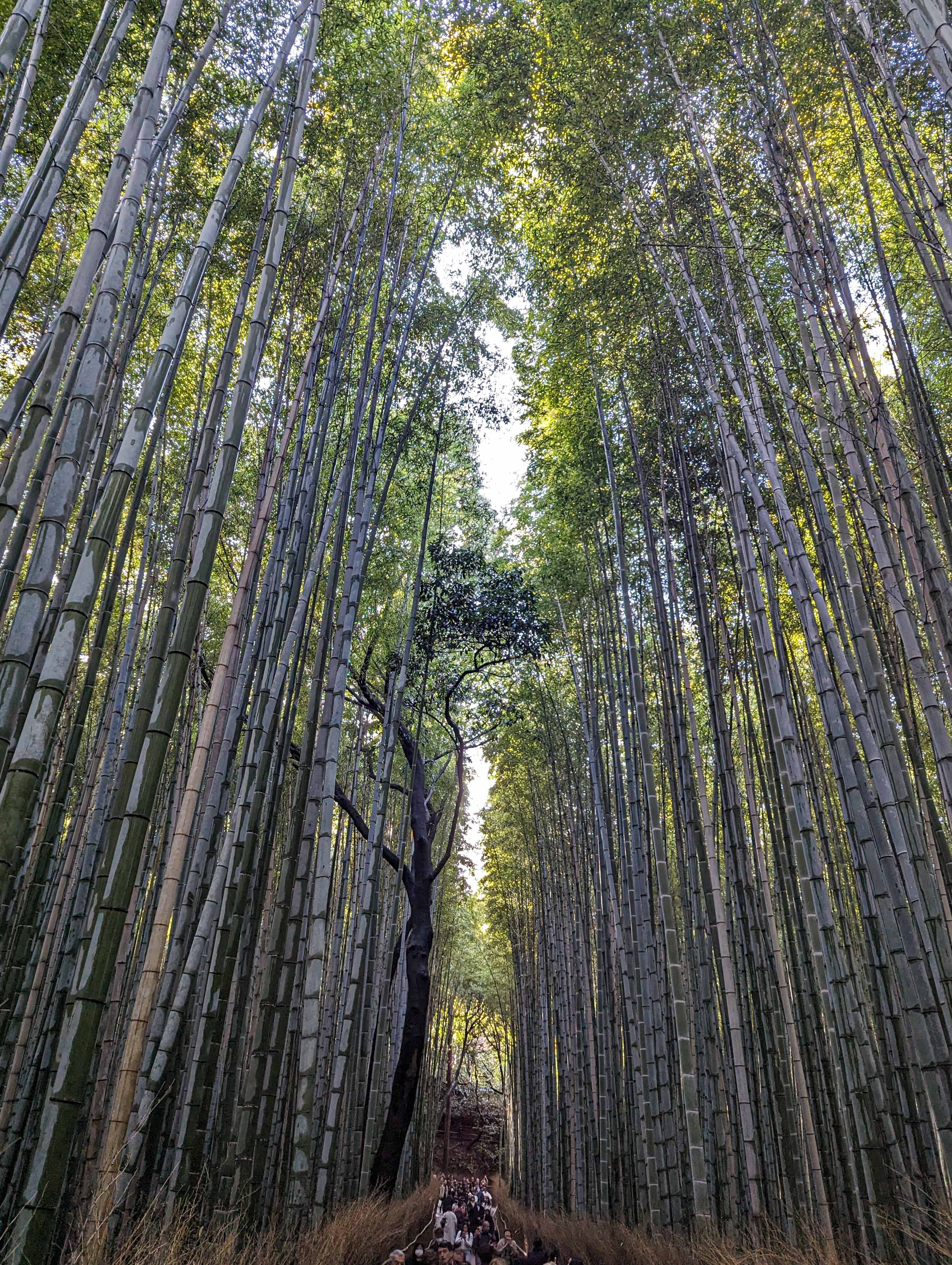
The next day on our off-the-beaten-track tour of Kyoto was the bamboo grove at Arashiyama. If you spend too much time on Instagram, you’ll have undoubtedly seen photos of this place. Huge bamboo stalks arch up over the path, creating a walkway of a few hundred metres, entirely flanked by bamboo. Ideal social media fodder. After an early morning hand-ground drip coffee, we had jumped on a train and arrived before the grove got too busy, while the Instagram lot would presumably still be in hair and make-up. The Arashiyama bamboo grove is a testament to what happens if you plant bamboo in a corner of your garden and forget about it. The stuff is completely out of control. Some stems reach as high as a five-storey building, and sway in the breeze, knocking into each other and generally looking very photogenic indeed. We had a look about, took a few photos of the bamboo, a few of ourselves, and made our way back to the train station against the seas of late-morning influencers heading into the grove for their content.

It happened to be Nicola’s birthday when we were in Kyoto, so after our morning drip-coffee, I headed to Donki to get her a birthday card. I couldn’t find one, so she ended up with a 3D Christmas card featuring Japanese temples in the snow. That evening, we decided to treat ourselves to a little birthday dinner. A full omakase was way out of our budget, even on a birthday, so we headed to the Pontocho area, found a restaurant that didn’t have an English menu, and asked for a table for two in terrible Japanese. We used Google Translate to ask for ‘¥10,000 of good food for two people’, and set about having plate after plate of delicious food. I’m still not sure what a lot of it was, but it was pickled, marinated, charred, crispy, crunchy, tangy and superb. We ate to our fill, paid up, and walked back along the tree-lined Kiyamachi-dori canal, breathing in the autumnal evening air and very content indeed.

The Gion area of Kyoto is one of the most visited, as it’s home to clusters of wooden houses and practising geishas. Walk through the narrow cobbled streets and you’ll occasionally glimpse a pair of pristinely dressed women gliding serenely through the low doorways of wooden houses. There are plenty of signs reminding you not to take photos of geishas, and even more signs advertising outfit rental and photoshoots. We navigated our way through the kimono-clad masses and headed for Kagizen Yoshifusa Shijo, where we ordered two of the greenest dishes of food I’ve ever seen. Nicola had a huge bowl of kuzukiri, sweet, syrupy noodles, while I had a vivid green matcha tea. We were surrounded by Japanese families in their smartest clothes and it was a wonderful place to spend an hour or so, surrounded by calmness and quiet.


Towards the end of our time in Kyoto, we headed for the Philosopher’s Path, Tetsugaku no michi, which winds around the base of the mountains to the east of Kyoto. The path is apparently named because two professors from Kyoto University used to regularly walk its route to relax. Perhaps the A219 in Hammersmith by my current office may one day be called ‘Travel Writer’s Walk’. We had the whole of the Philosopher’s Path to ourselves, and walked along as the sun set over Kyoto. Every so often we stepped off the path to peer into a temple, to admire a neatly-raked gravel garden, and to marvel at the serenity of the walk. Kyoto is a magnificently beautiful city, and I can see why so many visit. It’s not lost on me that we were also visiting, but I like to think we also did our best to spend time at some less-frequented things in the city. With our arms by now aching quite considerably from the hostel coffee grinder, we packed up our backpacks and headed to our final stop in Japan: Osaka.


